Mapping Success Patterns in Different Poker Formats Within European Licensed Environments
Yves Wolf · Aug 31, 2026

Mapping Success Patterns in Different Poker Formats Within European Licensed Environments
European licensed poker environments operate under strict regulatory frameworks that shape how players approach various formats and track performance metrics over time. Data collected from platforms regulated by bodies such as the Malta Gaming Authority shows distinct success indicators across cash games, tournaments, and mixed variants, with patterns emerging from thousands of hands played under controlled conditions. Those who examine these datasets note that licensed sites enforce standardized random number generators and audit trails, which in turn provide clearer baselines for measuring outcomes in different game types.
Core Formats and Their Regulatory Context
Texas Hold'em cash games remain the dominant format in licensed European markets, yet success patterns differ when compared to Pot Limit Omaha or tournament structures because cash games allow continuous play with variable stack depths while tournaments impose escalating blinds and fixed starting stacks. Regulators require detailed reporting on player activity, which allows researchers to map win rates across formats without the interference of unregulated offshore operations. In August 2026 several jurisdictions plan to release updated compliance statistics that cover the previous fiscal year, giving analysts fresh numbers on how format-specific strategies perform under uniform licensing rules.
Cash Game Patterns
Players in cash games within licensed environments often demonstrate higher session volumes because tables remain available around the clock, and success correlates strongly with consistent position play and pot control rather than all-in confrontations. Figures from industry reports indicate that participants who maintain bankrolls at least 30 buy-ins deep achieve steadier results across thousands of hands, while shorter stacks encounter sharper variance spikes that regulatory caps on deposit limits can amplify. Observers note that European operators publish aggregated data showing hold'em cash games produce lower average rake percentages than Omaha variants, which influences long-term profitability calculations.
Tournament Structures and Performance Metrics
Tournaments present different success markers because elimination formats reward survival alongside chip accumulation, and licensed platforms must display payout structures transparently before registration closes. Multi-table events display clearer return-on-investment curves when tracked across large sample sizes, with data revealing that late-position aggression yields measurable edges once fields shrink below 20 percent of the starting field. Sit-and-go formats, by contrast, compress decision windows and produce tighter distributions of outcomes that researchers can model more precisely using regulatory audit logs.
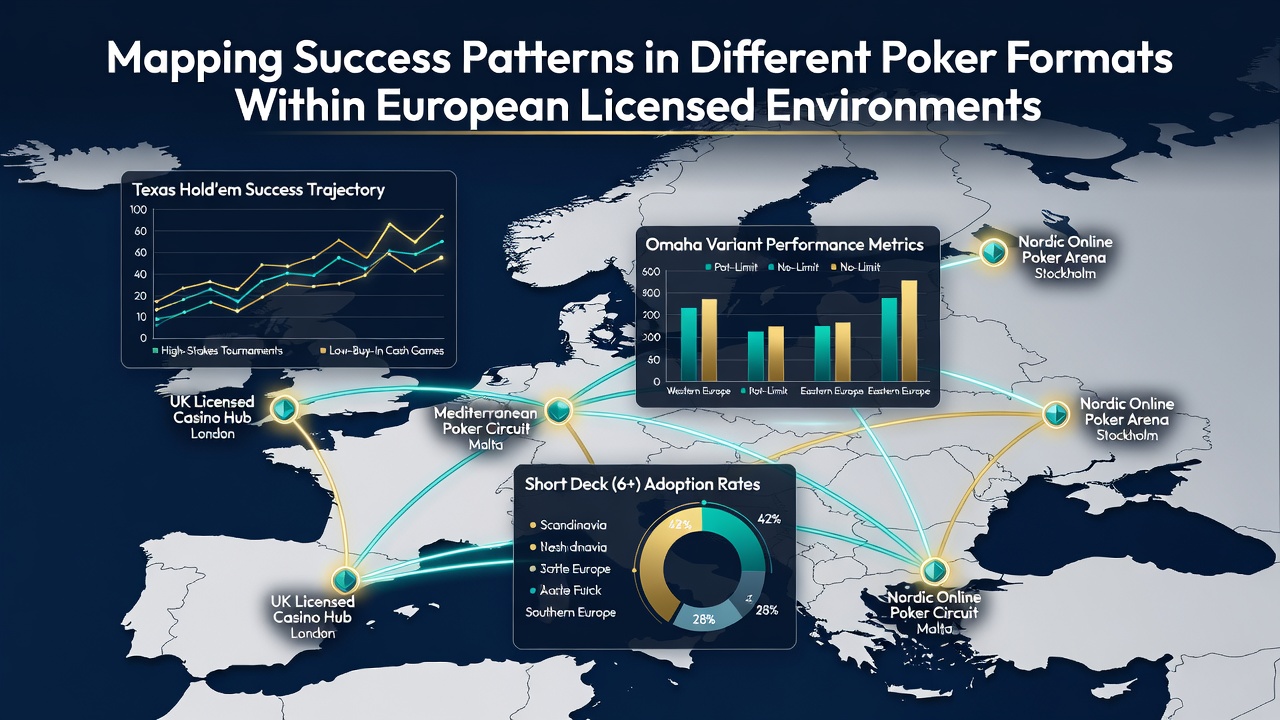
What's notable is how these patterns shift when operators introduce format-specific leaderboards or loyalty adjustments that comply with national licensing conditions. One study released through the European Gaming and Betting Association European Gaming and Betting Association examined over two million tournament entries and found that players who adjusted aggression metrics according to blind levels posted higher average finishes than those who maintained static ranges throughout.
Variant-Specific Observations
Pot Limit Omaha introduces additional complexity because four-card starting hands create wider ranges and more frequent multi-way pots, yet licensed environments cap maximum buy-ins and enforce responsible gaming pauses that interrupt extended sessions. Success data collected under these constraints shows that players who specialize in one variant rather than rotating across multiple formats post higher hourly rates once sample sizes exceed 50,000 hands. Mixed-game rotations, although less common, appear in certain licensed networks and require participants to adapt rapidly, producing measurable differences in error rates when compared with single-variant specialists.
Bankroll and Risk Management Trends
European licensing rules often mandate reality-check prompts and loss-limit tools, which operators integrate directly into client software, and these features correlate with steadier bankroll trajectories across formats. Cash-game specialists tend to utilize the tools more frequently than tournament players because cash sessions can extend for many hours, whereas tournament structures naturally cap exposure through buy-in amounts. Aggregated figures reveal that users who set daily loss limits reduce the frequency of large drawdowns regardless of the format chosen.
Data Integration Across Jurisdictions
Cross-border comparisons become possible when multiple regulators publish standardized metrics, and researchers have begun aligning datasets from different member states to identify format patterns that persist beyond national boundaries. A report issued by the University of Malta's gaming research unit University of Malta gaming research unit examined player-level data from three licensing regimes and documented consistent advantages for position-aware strategies in hold'em cash games while noting higher variance in Omaha events under identical responsible-gaming parameters. These alignments help operators refine game offerings without violating licensing conditions.
Conclusion
Mapping success patterns across poker formats in European licensed environments relies on transparent regulatory data, standardized platform reporting, and large-scale hand histories that reveal format-specific edges. Cash games, tournaments, and variant rotations each generate distinct performance signatures once regulatory constraints are factored in, and ongoing releases scheduled for 2026 will supply additional material for continued analysis. Observers continue to track how these patterns evolve as licensing frameworks adapt to new technological and compliance requirements.